
Originally published April 20, 2017 · Updated by The Homestead Guru Editor on November 8, 2026.
Affiliate disclosure: This article contains paid links. As an Amazon Associate I earn from qualifying purchases.
 Maybe you wanted to start composting this Earth Day, but you’ve heard it’s tricky to get right.
I understand. nobody wants a stinky mess out back that will draw vermin, or worse!
However, nobody wants to shell out for fancy compost drums or “activators” that might give you amazing compost, or might give you nothing but a gross rotting mess.
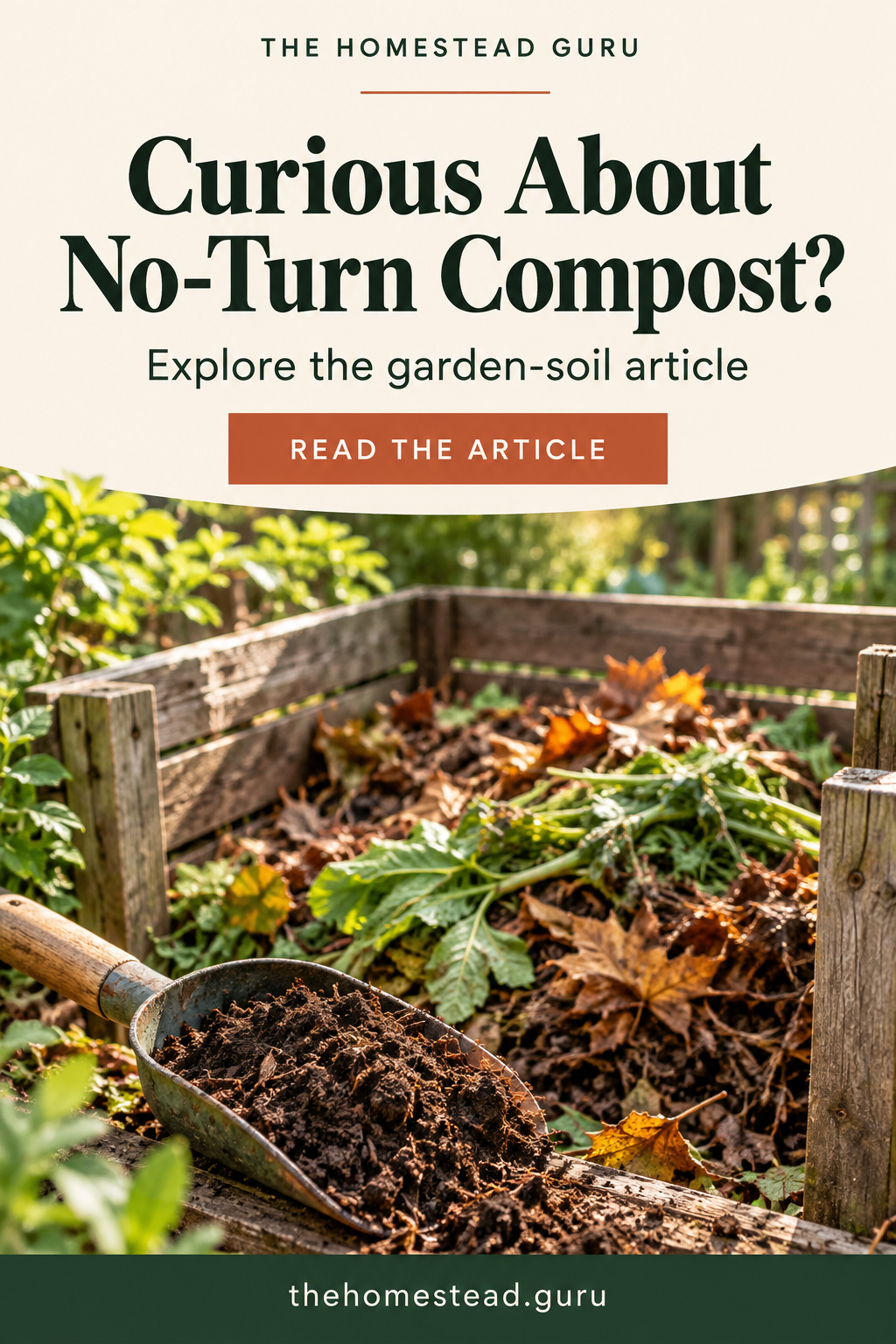
Build a simple no-turn compost pile
Gardener and author David The Good shows us how to do exactly that in this video! He uses no commercial products to build the pile. Even the “bin” is harvested from his land!
The demonstration was shared by Marjory Wildcraft’s The Grow Network. Watch it here:
Brown materials supply carbon, while green materials supply nitrogen. Start with about two to three buckets of browns for each bucket of greens. Keep the pile damp, like a wrung-out sponge, and leave space for air. The EPA home-compost guide explains how to balance those ingredients.

- Dry leaves, shredded uncoated cardboard and plain paper are all brown matter.
- Food scraps, freshly mowed grass, and still-living brush clippings are all defined as green matter.
David also adds something he calls biochar, which is a whole ‘nother topic by itself!
Support soil life with compost
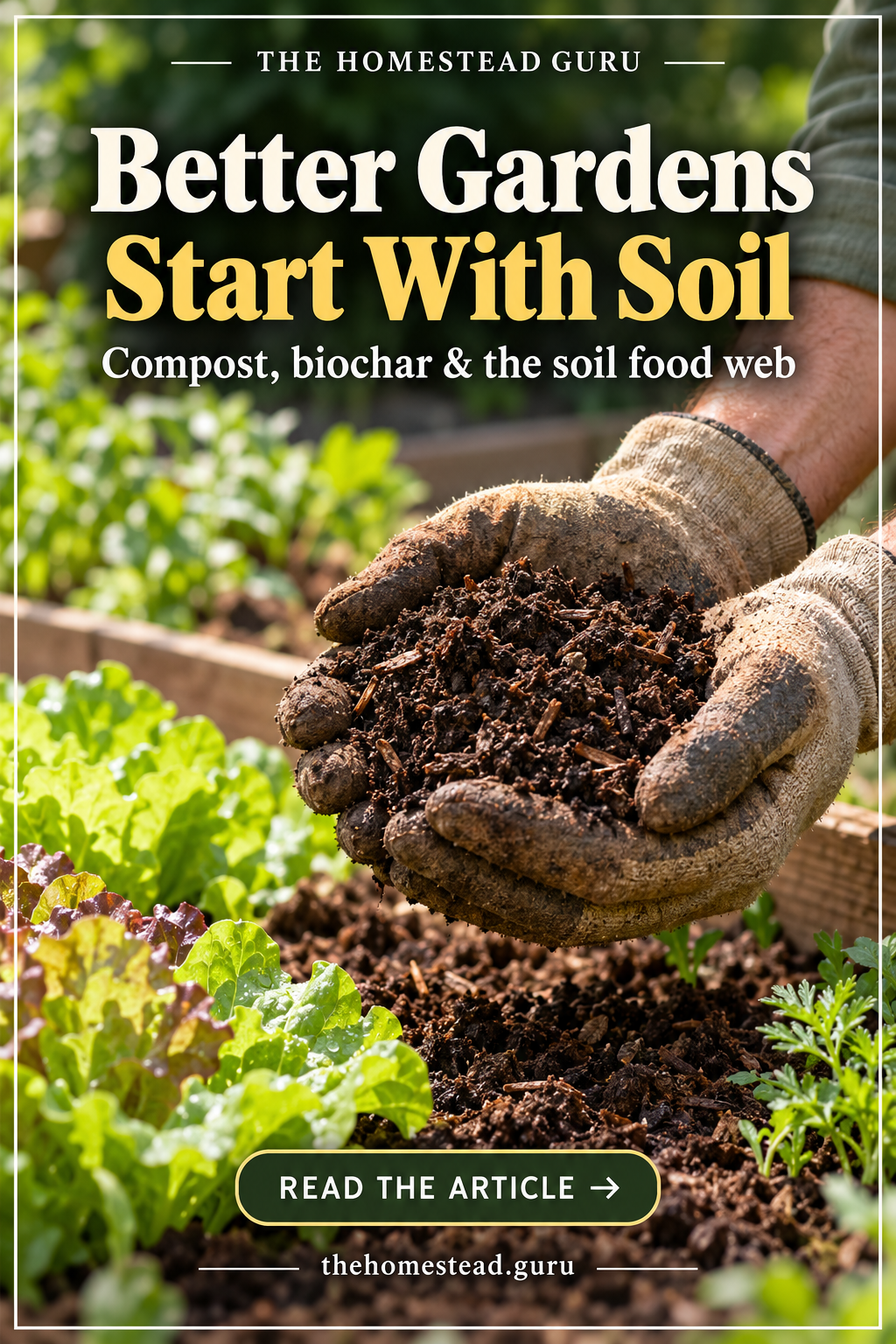
Healthy soil supports roots and soil organisms. USDA Climate Hubs explains how compost and biochar can work together in soil.
Microbial action is what heats up a good compost pile, making it active, and even producing steam when you stick a shovel into it.
Biochar is a porous, carbon-rich material made by heating biomass with very little oxygen. Its pores can hold water and provide habitat for soil organisms. That does not make biochar a complete fertilizer or guarantee better harvests. Utah State University Extension reports mixed crop results, with outcomes that depend on the soil, crop and biochar.
 (paid link) Get the book here on Amazon (paid link) !
Charge biochar with compost before use
Biochar, activated charcoal and terra preta are different things. Biochar is a soil amendment. Activated charcoal is processed for uses such as filtration. Terra preta refers to fertile, human-enriched soils in the Amazon, not another name for a bag of charcoal. Utah State University explains biochar and its origins.
Gardeners often mix biochar with compost before applying it to soil. This step is called charging. USDA Climate Hubs describes letting a compost-biochar mixture sit for a few weeks to help reduce early nutrient tie-up. Follow the instructions for your particular product and start with a small trial. Biochar can raise soil pH, so check your soil before adding it broadly.
You can make good compost without biochar. A no-turn pile usually breaks down more slowly than one you mix regularly. Check its moisture and smell, and expect many months rather than a fixed finish date. If it smells sour or stays soggy, add coarse browns and loosen the pile to restore airflow. Keep meat, dairy and greasy food out of a basic backyard pile.
If you want to learn more about building healthy soil from the microscopic level, I highly recommend the book Teaming with Microbes: The Organic Gardener’s Guide to the Soil Food Web. (paid link)
 (paid link) Get the book here on Amazon (paid link) !
Composting doesn’t have to be complicated, labor-intensive, or even smelly, so get out there and make a no-turn compost pile this week. Your garden will thank you!
Pin this guide
Choose an image to save to Pinterest.