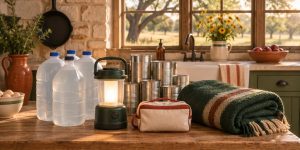

Walk through your place and imagine a full day without power or running water. What would you need at breakfast? How would you water the animals? What would you grab if everyone had to leave in ten minutes? Use this list as a walk-through and mark what you have, what needs replacing and what someone else in the house should know where to find.
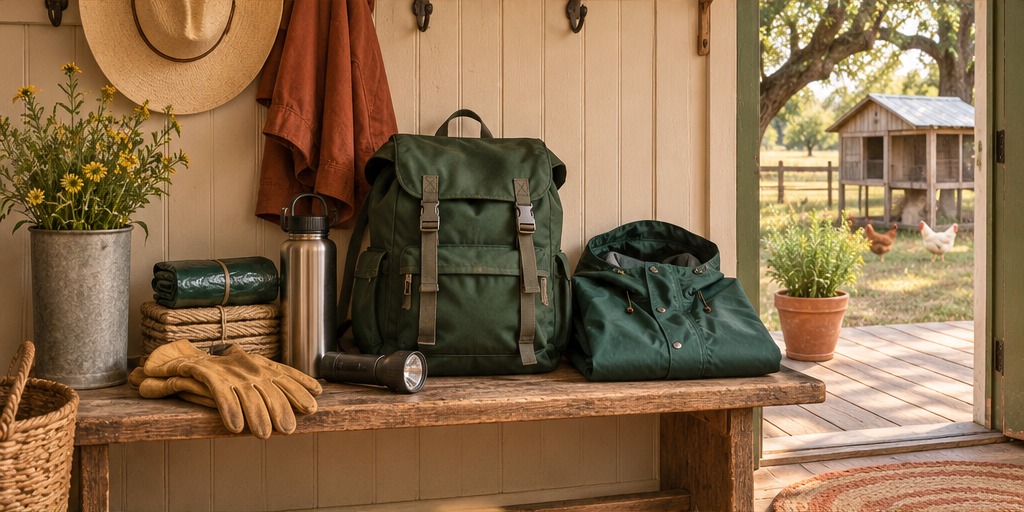
If you’re starting from scratch, begin with the ten essentials and come back here as you work through the rest of the house.
As an Amazon Associate I earn from qualifying purchases.
Water
- Stored drinking water. Start with one gallon per person per day for three days. Add more for heat and animals. If space allows, work up toward two weeks. Reliance Aqua-Tainer on Amazon (paid link).
- Food-grade water containers. Pick a size you can move when full. Label the fill date and replace water you bottle yourself every six months.
- An official water advisory you can find quickly. Bookmark your water utility and county emergency alerts. During an advisory, follow the directions for that specific notice.
- Water for the animals. Measure a normal day’s use at the coop, barn or pet bowls. Account for summer demand and keep a way to refill each waterer by hand.
- A way to carry and pour water. Keep a clean pitcher and a dedicated carry jug where you’ll use them.
Food and the kitchen
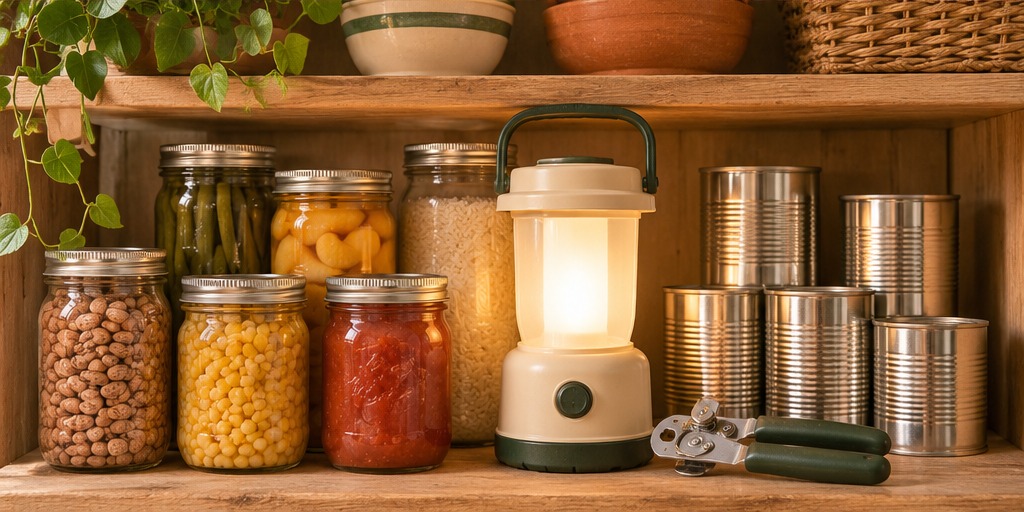
- Three days of shelf-stable meals. Build a menu from food your household already eats. Include meals that can be served straight from the pantry.
- A manual can opener. Store it next to the cans and make sure everyone who might need it knows how to use it. OXO Good Grips manual can opener on Amazon (paid link).
- Food for specific diets. Include allergy-safe snacks, familiar foods for picky eaters and any medically necessary foods.
- Infant supplies, if needed. Keep the formula or feeding supplies your baby already uses, plus clean bottles and your usual diaper supplies.
- A fridge and freezer thermometer. Put one in each compartment. If power is out, keep doors shut and use official food-safety guidance before deciding what to keep. AcuRite refrigerator and freezer thermometer on Amazon (paid link).
- A cooler and frozen ice packs. Keep the packs frozen and the cooler easy to reach.
- A pantry rotation spot. Move older cans forward and replace what you use. Set aside a meal you can put together in the dark.
Light, power and alerts
- A headlamp or flashlight for each adult. Put one by your bed and another near the door you use after dark.
- A battery-powered lantern. Use it for meals, cleanup or a common room. Test it and note which batteries it takes. Etekcity battery lantern on Amazon (paid link).
- Spare batteries. Match them to your lights and radio. Keep a spare set with each device.
- A charged power bank and cables. Check that the bank can charge your own phone and store it with the right cord. Anker 313 10,000 mAh power bank on Amazon (paid link).
- A NOAA weather radio. Set up local alerts and test the battery backup before storm season. Midland WR120B NOAA weather radio on Amazon (paid link).
- Working smoke and carbon monoxide alarms. Test the alarms and check the manufacturer’s replacement date. Use battery backup where appropriate.
- A written backup power plan. Write down what needs power first. If you use a fuel-powered generator, run it outdoors at least 20 feet from doors, windows and vents. Keep camp stoves and grills outdoors.
- A car charger. Keep a compatible adapter and cable in the vehicle for evacuation trips.
Health and sanitation
- Prescriptions and a medication list. Ask your pharmacy about refill timing and emergency storage. Keep doses and pharmacy numbers on paper.
- A first-aid kit. Include basic wound supplies, gloves and the extras you know how to use. Replace items after you use them. First Aid Only 299-piece kit on Amazon (paid link).
- Spare glasses, hearing-aid batteries and device supplies. Pack the everyday items you’d have trouble going without and note where to get replacements.
- A cooler or backup plan for temperature-sensitive medicine. Ask your pharmacist which temperatures are safe and how long your medicine can be out of refrigeration.
- Soap, sanitizer and toilet paper. Keep a small kit for the bathroom and a second kit that can leave with you.
- Heavy-duty bags, ties and disposable gloves. Keep a lidded trash can handy and follow your local utility’s instructions if sewage service fails.
- Diapers, wipes and period supplies. Store the sizes and types your household actually uses.
- Masks appropriate to your local hazards. Check public-health guidance for fit and use if wildfire smoke is a concern where you live.
Home, kids and animals
- Blankets and seasonal layers. Set aside a dry layer for each person. Write down where you can go if the heat or cold becomes unsafe indoors.
- Sturdy shoes and work gloves. Keep shoes near beds and a pair of gloves with the household tools.
- A tarp and basic repair supplies. Keep duct tape, cord and a tarp together for small temporary fixes you can safely reach.
- A utility shutoff reference. Label where the water shutoff, electrical panel and any gas shutoff are. Write down whom to call and follow your utility’s instructions.
- A fire extinguisher. Keep it accessible, read its directions and know your exits.
- A few things that keep kids settled. Add a card game, a book, a comfort item and snacks they already like. Let the kids help pack them.
- Extra animal feed and carriers. Keep feed dry. Put leashes, crates and vet numbers where someone else can find them.
- A neighbor who knows the animal routine. Write down who can get into the coop or barn and where the feed, water and carriers are kept. Return the favor.
If you need to leave
- A go-bag. Pack a change of clothes, water, snacks, a light and other essentials into a bag you can lift.
- Copies of key documents. Keep ID, insurance, prescriptions and animal records in a portable waterproof pouch.
- Cash in small bills. Keep enough for the small purchases you’d need to make along your route.
- A paper map and two routes out. Mark where you can go and give everyone the address. Follow local evacuation directions as conditions change.
- A written contact list and meeting place. Pick a nearby meeting place and another outside your neighborhood. Put one out-of-area contact on everyone’s list.
- A grab-last list. Put a note by the door for everyday items such as phones, essential medication, glasses, keys and pet carriers.
Take ten minutes to try the list out. Let someone else find a flashlight, get a meal out of the pantry and show you where they’d look for the animal supplies. Put whatever was hard to find somewhere better.
Further reading from Ready.gov on emergency supplies and the CDC on storing drinking water.
For outages, see CDC guidance on power outage safety and FoodSafety.gov’s fridge and freezer chart.