
Originally published May 16, 2016 · Updated by The Homestead Guru Editor on November 8, 2026.
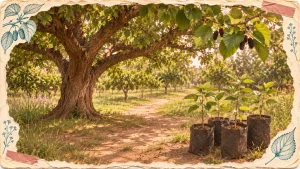
A leafy neighborhood can offer shade, places to walk and space to gather. A 2016 study asked whether the amount of vegetation around women’s homes was associated with their risk of death.
Look at the actual comparison
Researchers used the Nurses’ Health Study to follow 108,630 U.S. women from 2000 through 2008. They recorded 8,604 deaths and estimated residential greenness from satellite imagery.
After adjustment for factors including age, smoking and socioeconomic status, women in the greenest fifth of residential areas had a 12% lower rate of nonaccidental mortality than those in the least-green fifth. Read the original study by Peter James and colleagues for the methods and uncertainty around that estimate.

Keep the limits in view
This was an observational study. It did not randomly assign people to greener homes, prove that vegetation caused the difference, or show that each woman would live 12% longer. Its participants also do not represent every population.
The researchers discussed physical activity, social contact, air quality and mental health as possible pathways. Those explanations remain different from a guarantee about any one garden, park or person.
Find a little nature where you live
You do not need a farm to make room for green things. Try an apartment herb pot, a neighborhood walk, a community garden or a shaded place to meet a friend. Choose something that suits your space and abilities, without treating it as a medical prescription.
Continue the conversation
Have a question about this article or something useful to share? Join its discussion in our community.